

How to Lose Belly Fat: Why Spot Reduction Does Not Work
01 Oct 2026
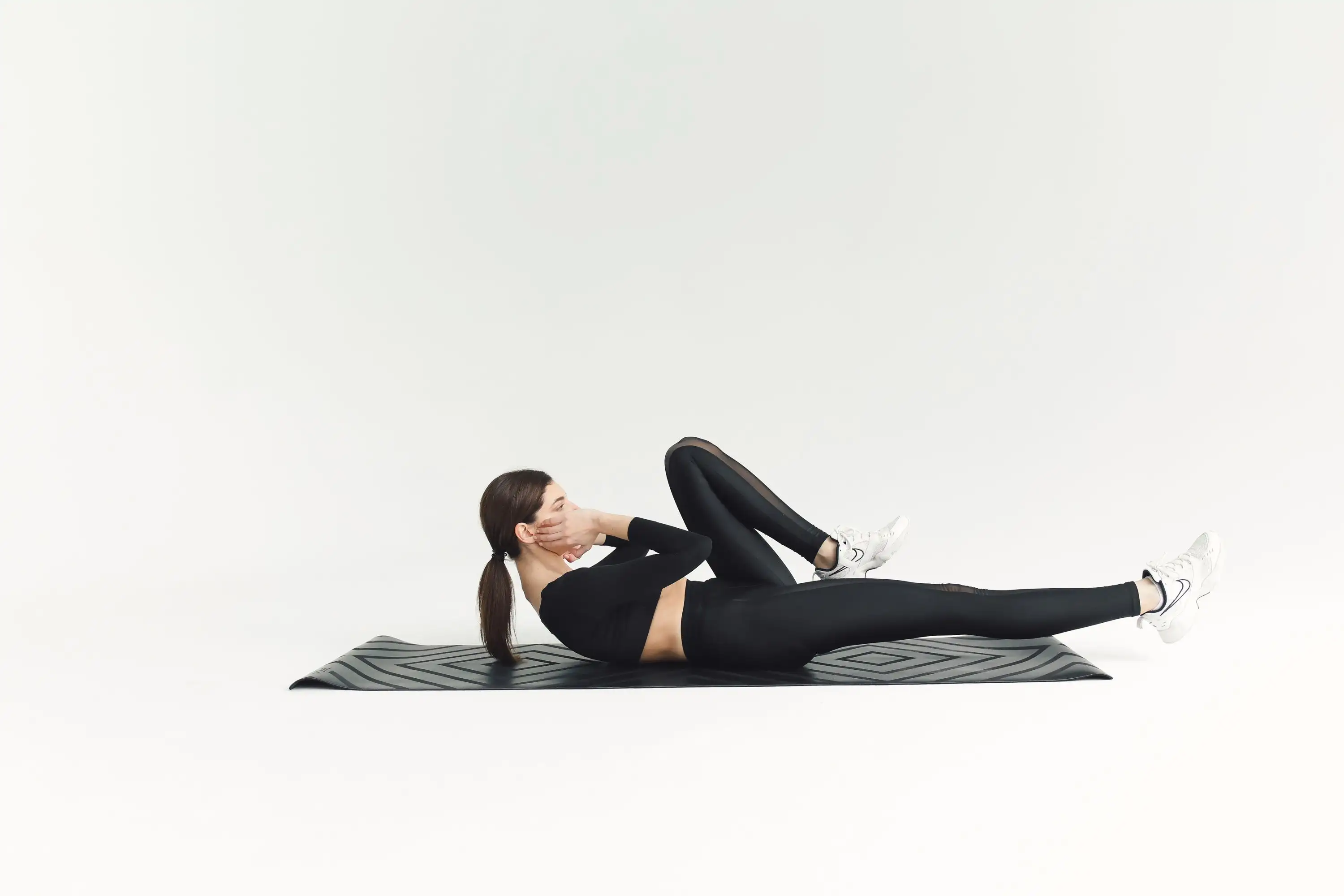
You cannot target belly fat with crunches or any other exercise. Spot reduction, the idea that you can burn fat from one specific area by training it, is a myth. To lose belly fat, you have to lower your overall body fat, and your belly will follow in its own time.
That's the truth the entire fitness industry has been dodging for decades, because "300 crunches a day melts belly fat" sells a lot better than "eat slightly less and be patient." Every ad promising to blast fat from your stomach, every waist trainer, every fat-burning tea, is selling you the same myth in different packaging. So let's clear it up properly, and then talk about what genuinely works, because the real answer is more freeing than the fantasy.
One reframe changes how the whole thing feels. You don't get to choose where the fat comes off. But you absolutely get to lose it. And once you stop wasting effort on the myth, the thing that actually works is refreshingly simple.
Can you target belly fat with exercise?
No, and the reason is just how the body physically works. When you exercise, your muscles can't reach over and burn the fat sitting nearest to them. Fat doesn't work like a local fuel tank. Instead, your body breaks down fat stores from all over through a process called lipolysis, converts them into fatty acids, and ships that fuel through your bloodstream to wherever it's needed. The fat fuelling your ab workout might come from your arms, your back, or your legs just as easily as your stomach.
This has been tested, repeatedly, and the results are consistent. In one frequently cited study, participants followed a dedicated sit-up programme for weeks and lost no more fat from their bellies than from anywhere else. Another clever study had people train just one leg on a press machine, leaving the other untrained. If spot reduction were real, the working leg should have got leaner. It didn't. The body pulled fat evenly, ignoring which muscle was doing the work entirely.
So the hundreds of crunches, the endless planks, the ab gadgets? They build a strong core, which is worth having. What they don't do is burn the fat on top of it.
Do ab exercises burn belly fat?
Not directly, and this is the distinction that changes everything. Ab exercises train the muscles underneath your belly. Fat loss removes the layer sitting over them. They're two separate jobs. You could build a genuinely strong, well-developed core and still not see it, because it's hidden under a layer of body fat that crunches simply don't touch.
This is why core work is still worth doing, just for the right reason. A strong core improves your posture, protects your lower back, and makes almost every other lift and movement better. It's foundational strength, and a few of the best classes for core strength and stability will build it faster than crunches ever could. Just train your core for what it actually delivers, strength and stability, and handle fat loss as its own separate project.
| Can't be targeted | No exercise burns fat from one spot. Your body decides where it comes off, not you. |
| The real lever | A moderate calorie deficit, around 300 to 500 calories a day. This is what lowers body fat. |
| Protect muscle | Eat enough protein and lift weights, so you lose fat rather than muscle. |
| Sleep counts | Poor sleep pushes hunger hormones the wrong way. It matters more than most people think. |
| Belly goes last | It's often the last place to slim down. Judge progress over a month, not a day. |
What actually works to lose belly fat?
If you can't target it, how do you lose it? By lowering your total body fat, at which point your belly shrinks along with everything else. Four things genuinely move the needle, and notice how none of them involves a special ab routine.
A moderate calorie deficit. This is the engine of all fat loss. Eating a little less than your body burns, in the region of 300 to 500 calories a day, is what forces your body to draw on its fat stores. Not a crash diet, not cutting out entire food groups, just a sustainable, moderate gap you can hold for months. Everything else on this list supports this one thing.
Enough protein. When you're in a deficit, protein protects your muscle so that the weight you lose is fat, not the muscle you want to keep. It also keeps you fuller for longer, which makes the deficit easier to sustain. It's the most useful nutrient for anyone trying to change their body composition, and getting your protein right does a lot of quiet heavy lifting here.
Strength training. Lifting weights builds muscle, and muscle is metabolically active, so it nudges up the energy you burn even at rest. It also shapes the body underneath as the fat comes off, which is the difference between simply smaller and genuinely toned. If you're new to it, learning the fundamentals of getting stronger is the place to start.
Sleep and stress. This is the one people skip, and it matters more than they expect. Poor sleep and chronic stress push your hunger and fat-storage hormones in exactly the wrong direction, making a deficit harder to maintain and belly fat more stubborn. A run of better nights' sleep genuinely supports fat loss, unglamorous as that sounds.
That's the whole formula. A deficit you can live with, enough protein, some lifting, decent sleep, and time. If it sounds less exciting than a fat-burning tea, that's because it's real.
Stop guessing. Get a plan that actually works.
Losing fat comes down to a handful of things done consistently: the right deficit, enough protein, smart training. A Fitness First coach builds it around you and keeps you on track, so you spend your effort on what works instead of on myths.
| ✓ A plan built around you | ✓ Training and nutrition together | ✓ Real accountability |
New to it? See what to expect from your first session
| Can I target belly fat?No. Spot reduction is a myth. You lower overall body fat, and the belly follows in its own time. |
| Do crunches burn belly fat?No. They build the muscle under the fat. Train your core for strength, not fat loss. |
| So what actually works?A moderate calorie deficit (300 to 500/day), enough protein, strength work, and good sleep. |
| Why is my belly so stubborn?Genetics decide the order. The belly is often last. Judge progress over a month, not a day. |
Why is belly fat the hardest to lose?
Because for a lot of people, the belly is simply where the body clings to fat the longest, and that's mostly written into your genetics and hormones rather than anything you're doing wrong. Fat leaves in the order your body decides, and frustratingly, the spots you most want to change are often at the back of the queue.
There's a reassuring flip side to that. If you're holding a consistent deficit and the scale and measurements are slowly moving, the belly fat is going. It's just going last. That's not failure, and it's not a sign you need a different method. It's a sign the method is working its way down the list to the place you care about most. This is where most people quit too early, right before the part they wanted. Understanding that a healthy body composition is a long game is what keeps you in it long enough to win.
The gimmicks that don't work (and why they sell anyway)
Once you understand spot reduction is a myth, a whole industry of products reveals itself for what it is. None of these do what they claim:
- Waist trainers and sweat belts. They squeeze water out of you, not fat. The moment you rehydrate, it's back.
- Fat-burning teas and detox drinks. At best a mild diuretic or a caffeine hit. They don't touch the fat on your belly or anywhere else.
- Endless ab machines and gadgets. Good for building core muscle, useless for burning the fat over it.
- Cutting one food group. "No carbs" or "no sugar" only works if it happens to put you in a deficit, and it's rarely sustainable. The deficit is the mechanism, not the rule.
If any of these worked, spot reduction wouldn't be a myth. The reason they keep selling is that the honest answer, eat a bit less and be patient, isn't something you can put a price tag on.
How long does it take to lose belly fat?
At a sensible, sustainable pace of around half a kilo of fat a week, most people see meaningful change across 8 to 12 weeks. The belly, being often the last to go, may take longer than the rest of you, so the trick is to measure the right things. Ditch the daily weigh-in, which bounces around with water and food. Instead, track your waist with a tape measure, notice how your clothes fit, and take a photo every few weeks. Those tell the real story, and they'll show progress your bathroom scale often hides. Strength on the bar and steadier energy count too, and learning to read the signs your training is working stops you writing off real progress just because the belly hasn't caught up. It helps to understand the difference between losing fat and losing weight, and why reshaping your body composition matters more than any single number on the scale.
The bottom line on belly fat
You can't pick where fat leaves, but you can absolutely lose it, and the way to do it is far simpler than the industry wants you to believe. A moderate deficit, enough protein, some strength work, decent sleep, and the patience to let your belly be the last to change. That's it. No teas, no trainers, no thousand crunches.
The freeing part is what this saves you. All the time and money you were about to spend chasing the myth can go into the handful of things that genuinely work. Start there, stay consistent, and let your body do the rest in the order it chooses.
Put the real method to work
Come and try Fitness First for free. Proper equipment, coaches who deal in facts not fads, and everything you need to lose fat the way that actually works.
Frequently asked questions
Can you target belly fat with exercise?
No. You can't choose where your body loses fat from, a concept called spot reduction, and it's one of the most tested myths in fitness. When you burn fat for energy, your body draws it from stores all over your body, not just the muscle you're working. Crunches build the muscle underneath your belly, but they don't burn the fat sitting on top of it. To lose belly fat, lower your overall body fat through a calorie deficit, and your belly will follow in its own time.
Why is belly fat the hardest to lose?
For many people the belly is simply where the body holds on to fat longest, and that's mostly down to genetics and hormones rather than anything you're doing wrong. Fat comes off in the order your body decides, not the order you'd choose, so the areas you most want to change are often the last to respond. If you're in a consistent calorie deficit, the belly fat is going, it's just going last.
What actually works to lose belly fat?
Four things, none of them glamorous: a moderate calorie deficit of roughly 300 to 500 calories a day, enough protein to hold on to muscle while you lose fat, good sleep to keep your hunger hormones steady, and consistency over months rather than weeks. Strength training and general activity help by building muscle and increasing the energy you burn. There's no belly-specific food, exercise or supplement that changes this.
Do ab exercises burn belly fat?
Not directly. Ab exercises strengthen and build the muscles of your core, which is worth doing for posture, stability and strength, but they don't burn the fat that sits over those muscles. You could do hundreds of crunches a day and still not see your abs if the layer of fat on top hasn't reduced through overall fat loss. Train your core for strength, and handle fat loss separately through diet and overall activity.
How long does it take to lose belly fat?
At a sustainable rate of around 0.5kg of fat loss per week, most people see noticeable change over 8 to 12 weeks, though the belly often takes longer than other areas because it's frequently the last place fat comes off. Rather than watching the scale daily, track your waist measurement, how your clothes fit, and monthly photos. Progress can feel invisible for weeks even when it's genuinely happening.
Related Articles

How to Read Real Fitness Progress Like a Coach
18 Aug 2026
.jpg)