Walk In With a Plan for the Gym, Not a Question Mark
10 Nov 2026
The best beginner gym workout plan is a simple full-body routine, done 2 to 3 times a week, built around five movements: a squat, a hinge, a push, a pull and a carry. Do 2 to 3 sets of 8 to 12 reps of each, and add a little weight whenever it starts to feel easy.
That's the entire thing. Everything below just shows you how to run it.
Most beginners don't quit the gym because they're lazy. They quit because they walk in, feel lost, drift between a few machines with no real plan, and eventually stop coming because nothing seems to be happening. The fix isn't more willpower. It's a plan simple enough to actually follow.
So that's what this is. A complete, no-nonsense routine you can start this week, with the exact exercises, how many sets, how many reps, and how to get better over time. No jargon, no 90-minute marathons, nothing you need a sports science degree to understand.
| How many days? | 2 to 3 full-body sessions a week, with a rest day between each. |
| How long? | 45 minutes to an hour, warm-up included. No need to live there. |
| The 5 movements | Squat, hinge, push, pull, carry. Everything else is a variation. |
| Sets and reps | Start at 2 to 3 sets of 8 to 12 reps. Leave 1 or 2 reps in the tank. |
| Machines or weights? | Both. Start on machines to learn, add free weights as you gain confidence. |
| How to progress | Add a little weight or a rep when today's sets feel easy. That's it. |
Why full-body beats a fancy split
You've probably seen those elaborate routines online. Chest day, back day, arm day, the lot. Ignore them for now. They're built for experienced lifters, and for a beginner they're the wrong tool entirely.
The logic runs the other way for a beginner. The fastest way to improve early on is to practise each basic movement often, because so much of those first weeks is simply your body learning the patterns. A full-body session two or three times a week lets you squat, push and pull several times weekly, rather than once. You learn quicker. You build more evenly. And if you miss a day, you haven't blown your only chance to train your legs all week.
The five movements your plan is built on
Forget counting muscles. Every good beginner plan is really just five human movements, and together they cover your whole body:
- Squat – bending at the knees and hips to lower and stand. Trains your legs and glutes.
- Hinge – bending mainly at the hips, like picking something off the floor. Trains your back, glutes and hamstrings.
- Push – pressing weight away from you. Trains your chest, shoulders and triceps.
- Pull – drawing weight towards you. Trains your back and biceps.
- Carry – simply walking while holding weight. Trains your core and grip, and it's as functional as training gets.
Master these and you've got a body that works well in the gym and out of it. If you want a deeper look at how to build them properly, our guide to getting stronger breaks each one down.
Your full beginner workout plan
So here it is, the plan itself. Do this full session 2 to 3 times a week, resting at least a day between. Start every session with 5 minutes of light cardio and a few easy warm-up sets. Pick a weight where the last couple of reps feel challenging but your form stays clean.
That's six exercises, around 45 minutes including your warm-up. It looks almost too simple, and that's exactly the point. Done consistently, with a little more weight over time, this will take a complete beginner a very long way.
Want it done for you? Start with a coach.
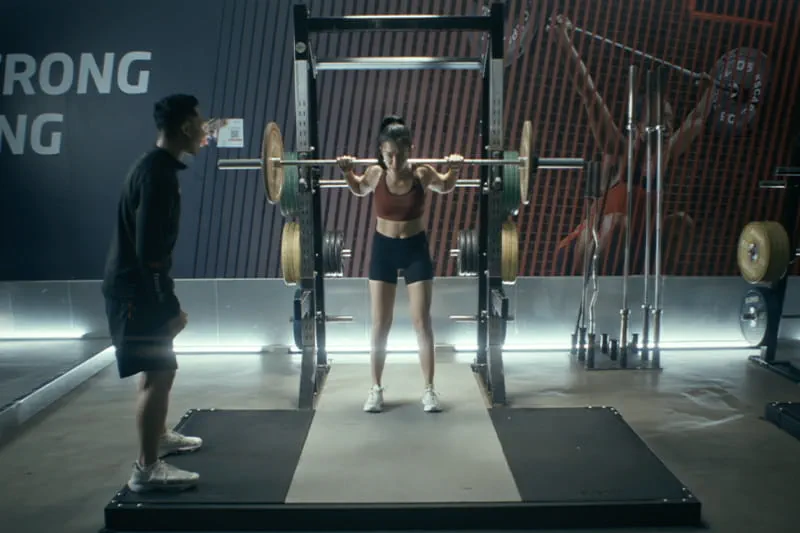
This plan works. But a Fitness First coach makes it effortless: they'll teach you each movement hands-on, set your weights, adjust the plan as you progress, and take every ounce of guesswork off your plate. It's the fastest, most confident way to start.
| ✓ Learn perfect form from day one | ✓ A plan that adapts to you | ✓ Zero guesswork |
New to it? See what your first session looks like
How many sets, reps and how much rest?
The plan above gives you the numbers. What do they actually mean, though? Sets are how many rounds of an exercise you do. Reps are how many times you repeat the movement within a set. For a beginner, 2 to 3 sets of 8 to 12 reps is the sweet spot for building strength and muscle without burning yourself out.
Rest 60 to 90 seconds between sets, enough to catch your breath and go again with good form. And the golden rule: stop each set 1 to 2 reps before you physically couldn't do another. You don't need to grind to total failure to make progress, especially early on.
How to actually get stronger: progressive overload
This is the one idea that turns a workout into real progress, and it's refreshingly simple. Your body adapts to what you ask of it, so to keep improving, you gradually ask for a little more. That's progressive overload, and it's the engine behind every result you're after.
In practice: when a weight starts feeling easy for your target reps, nudge it up a notch next time. Or squeeze out an extra rep. Or add a set. Keep a simple log in your phone so you remember what you lifted last time. Those small weekly increases are what separate people who stall from people who steadily transform, so trust the process and let your expectations stay realistic while the gains build.
Don't forget the part outside the gym
Your training is only half the equation. What you do between sessions decides how much of that hard work actually sticks:
- Eat enough protein. It's the raw material your muscles rebuild from. A protein target that matches your goal makes a real difference to your results.
- Sleep well. Muscle is built while you rest, not while you train. Better sleep is genuinely one of the most powerful things you can do.
- Stay consistent. Showing up next week matters more than any single session. Building that habit is a skill, and small daily habits are how it's done.
When to level up
Run this plan for 8 to 12 weeks and you'll be a noticeably different trainer: stronger, more confident, moving well. That's the moment to progress, whether that's heavier lifts, a bit more volume, or a new challenge. If you'd rather have an expert chart that path for you from the very start, it's worth understanding when a personal trainer is worth it. For a nervous beginner, having someone remove all the guesswork is often what makes the difference between starting and stopping. \
The honest bottom line
You don't need the perfect programme. You don't need fancy equipment or a complicated split. You need a simple plan, the willingness to show up two or three times a week, and the patience to add a little each time. That's genuinely it. Print this one out, or save it to your phone, and walk into your next session knowing exactly what to do. The hardest part is behind you the moment you stop guessing.
Try the plan at Fitness First, free
Come and run your first session on us. Full access to the machines and free weights you need, plus coaches on the floor if you want a hand getting started.
Frequently asked questions
What is the best workout plan for a beginner at the gym?
The best beginner plan is a simple full-body routine done 2 to 3 times a week, built around five basic movements: a squat, a hinge, a push, a pull and a carry. Do 2 to 3 sets of 8 to 12 reps for each, resting a day between sessions. Full-body training beats complicated splits for beginners because it lets you practise each movement several times a week, which is how you learn fastest.
How many days a week should a beginner work out?
Two to three days a week is ideal for a beginner. It gives your muscles enough stimulus to grow while leaving rest days between sessions for recovery, which is when your body actually adapts and gets stronger. Three well-done sessions you can sustain beat five ambitious ones you abandon after a fortnight.
Should beginners use machines or free weights?
Both, and there's no shame in starting with machines. Machines guide the movement for you, which makes them a great, low-pressure way to learn and build confidence. As you get comfortable, add free-weight versions like dumbbell presses and goblet squats, which also train your balance and stabilising muscles. A mix of the two is ideal for most beginners.
How long until a beginner sees results from working out?
You'll feel changes like better energy and sleep within the first one to two weeks. Strength climbs within two to four weeks, and visible changes usually appear around six to eight weeks of consistent training. Beginners often progress faster than experienced lifters, so the early months are the best time to build momentum.
What does progressive overload mean for a beginner?
Progressive overload simply means gradually asking a little more of your body over time so it keeps adapting. When a weight starts to feel easy for your target reps, you nudge it up slightly, or add a rep or a set. Those small, steady increases are the single most important principle behind getting stronger, and they're easy to track in a simple notes app or notebook.
Related Articles
How to Read Real Fitness Progress Like a Coach
18 Aug 2026