
How to Read Real Fitness Progress Like a Coach
18 Aug 2026
The clearest signs your training is working show up long before any visual change: rising strength, better energy, deeper sleep, steadier mood, faster recovery, and everyday tasks feeling easier. Most people miss every one of them. They walk past all six and fixate on the two messengers that lie to them most: the bathroom scale and a daily glance in the mirror.
That's the real problem. Not a lack of progress, but a habit of reading the wrong instruments. So this is a coach's checklist for reading the right ones. Learn to interpret these seven signals the way a trainer does, and you'll never again mistake a flat week on the scale for failure, or quit at week four when your body was already three weeks into changing.
Why the scale and the mirror are the wrong messengers
Here's what a coach knows that most gym-goers don't. Your body adapts to training from the very first session, but it does so from the inside out. Your nervous system sharpens. Your heart and lungs grow more efficient. Your muscles learn to fire harder before they visibly grow. All of that is real, measurable progress, and none of it shows up in a photo or on a scale for weeks.
The scale is the worst offender. It measures total body weight, and it cannot tell fat from muscle. Lose four pounds of fat while gaining four of muscle, which is exactly what good training does, and it reports back a flat, discouraging zero. Add in the daily noise of water, food and hormones, and the number swinging on any given morning tells you almost nothing about the month you're actually having.
The daily mirror glance is only slightly better. Lighting, posture, the meal you just ate, the mood you woke up in: all of it changes what you see hour to hour. Judging a months-long process by how you happen to look at 7am on a Tuesday is like grading a film by pausing on a single frame.
This is the conversation our coaches have more than almost any other. A member arrives around week four or five, frustrated, certain nothing is happening because they look the same. Then we walk back through their training log together. Their squat is up fifteen kilos. They're sleeping through the night. They climbed four flights of stairs that morning without thinking about it. Nothing was wrong. They were reading the two messengers that always report last, and ignoring the six that had been telling the truth all along.
| How do I know my workout is working?Rising strength, better energy, deeper sleep, steadier mood, faster recovery, easier daily tasks. |
| Is the scale a good measure?No. It can't tell fat from muscle, and daily weight swings with water, food and hormones. |
| Do progress photos help?Yes, taken right: every 4 weeks, same lighting, time, clothing and poses. Compare weeks, not days. |
| How long until I see results?Internal changes in the first few weeks. Visible changes around 8 to 12 weeks. |
So here are those six signals, plus the one visual tool that actually earns its place.
1. Your lifts are getting heavier or easier
This is the big one. If the weights you're moving are creeping up, or the same weights are starting to feel lighter, your body is adapting exactly as intended. That's progressive overload doing its work, and it's arguably the single most reliable sign of progress there is. Strength on the bar climbs well before size shows in the mirror, so your training log is often the first place real results appear. Add a couple of kilos to your squat across three weeks and you're progressing by the textbook, whatever the scale says. Our guide on getting stronger with Fitness First explains how to track and build this properly.
2. Your daily actions feel easier
Strength built in the gym doesn't stay in the gym, and soon you'll start noticing little changes in your daily routine. Look out for differences in your daily energy, sleep, recovery and general everyday movement. This is your training showing up where it matters most - in the texture of ordinary days, which quietly arrives. Coaches call this functional carryover, and for most people it's the benefit that actually changes their life.
3. Your energy has gone up
It sounds backwards that spending energy gives you more of it, but it's one of the most consistent early wins of regular training. As your cardiovascular system gets more efficient, it delivers oxygen and blood to your tissues with less effort, which leaves more in the tank for the rest of your day. If you're less sluggish in the afternoons, or simply more capable from morning to night, that's not a coincidence. That's your engine getting bigger. A well-built programme trains this deliberately.
4. You're sleeping better
Better sleep is one of the most underrated signals that your routine is working. Many people find that once they train regularly, they fall asleep faster, wake less through the night, and feel more refreshed in the morning. The link between exercise and sleep quality is well established, and the benefit compounds: better sleep drives better recovery, which drives better training. If your nights have improved since you started, your body is responding. Our sleep tips help you make the most of it.
5. Your mood and focus have lifted
Training works on your mind as much as your body. Regular exercise helps regulate mood by raising endorphins, lowering the stress hormone cortisol, and sharpening mental clarity. So if you're walking out of sessions with a clearer head and a lighter mood than you walked in with, that counts. It's not just "in your head" in the dismissive sense. It's a genuine, measurable benefit of the work you're putting in, and often one of the very first to arrive, sometimes within a session or two.
6. You're recovering faster between sessions
Pay attention to how you feel a day or two after training. As your fitness improves, the soreness that once lingered for days starts to fade faster, and you bounce back ready to train again sooner. That improving recovery is a clear sign your body is adapting to the demands you're placing on it. One caution worth stating plainly: some soreness early on is normal, but constant exhaustion or dread before sessions is the opposite signal. That's a sign to ease off or adjust, not to push harder. Our foam rolling guide cover how to recover properly so this sign keeps pointing the right way.
7. Showing up has stopped being a battle
Here's a sign almost nobody counts, and they should. When training stops feeling like a chore you have to force and starts becoming something closer to routine, even something you look forward to, you've built the single most valuable asset in fitness: consistency. Every visible result you're chasing is built on the back of it. If getting to the gym feels easier than it did a month ago, that's progress of the most important kind, because it's the progress that makes all the rest possible. If you want to keep that momentum, setting structured targets helps, which is what our guide to is built around.
The right way to use progress photos
Now the exception that proves the rule. If the daily mirror is a bad messenger, why do so many coaches recommend progress photos? Because a structured progress photo is a completely different tool from a glance in the mirror. One is noise. The other is data.
The mirror lies because it changes hour to hour with light, mood and posture. A progress photo removes exactly that noise, as long as you take it properly. The rules matter more than the habit itself:
- Same interval. Every four weeks, not every day. Daily photos just recreate the mirror's noise.
- Same conditions. Same lighting, same time of day, same clothing, same room.
- Same poses. Front, side and back, relaxed. Keep them consistent so you're comparing like with like.
- Compare across weeks, never days. The change is invisible at 24 hours and obvious at 8 weeks.
Used this way, photos flip from the thing that discourages you into one of the most motivating tools you have. Because your eye adjusts to gradual change in the mirror every day, you genuinely stop seeing your own progress. A photo from eight weeks ago doesn't have that blind spot. It shows you, plainly, what your daily reflection has been hiding. That's why coaches trust the structured photo and distrust the daily glance. Same camera, completely different messenger.
What the signs add up to
Notice how few of these involve a scale, and how the one visual tool that works is the one you control tightly. That's the whole point. Real progress is layered: it starts internally with energy, sleep and mood, builds through strength and recovery, shows up in everyday capability, and only then rearranges how you look. The visual changes do come. They're simply the final chapter, not the first. Read the earlier signs correctly and you give yourself the one thing most people lack at week four: a reason to keep going. For the related picture on how body changes actually unfold, our guides on body recomposition and fat loss versus weight loss both explain why the scale is such an unreliable judge of the work you're doing.
When the signs aren't there
Honesty matters here too. If you've trained consistently for eight weeks or more and genuinely none of these signs have appeared, that's useful information, not a reason for shame. Usually the cause is one of three things, and it's worth checking them in this order: are you sleeping enough, are you eating enough protein, and is your programme actually progressing you over time rather than repeating the same thing week after week? Most stalls trace back to recovery, nutrition, or a programme that's stopped challenging you. If the basics are solid and the signs still aren't showing, the programme itself probably needs rebuilding, and that's a job best done with expert eyes on it.
This is exactly what a coach is for
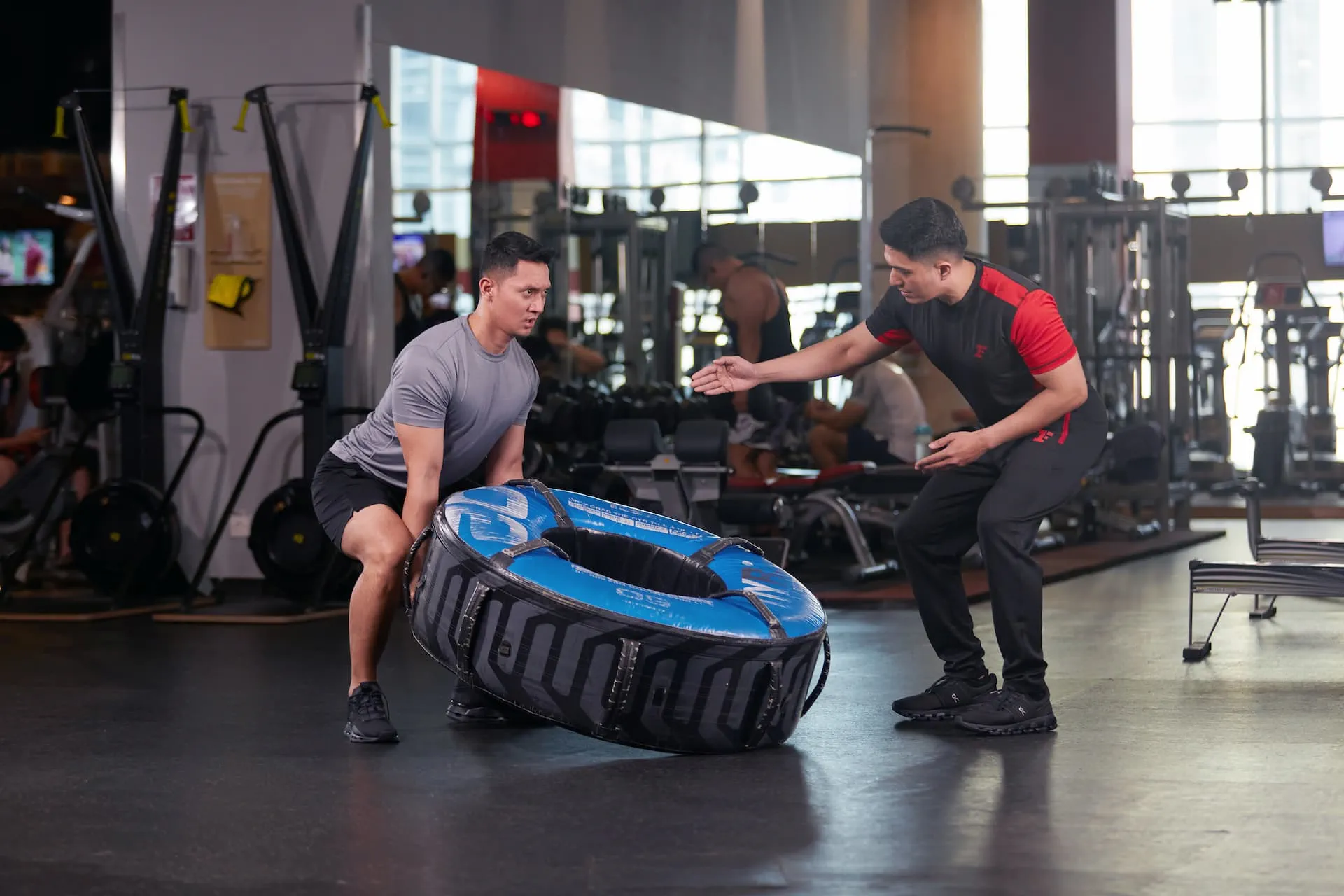
Reading these signs is a skill, and it's one a good personal trainer does for you automatically. A coach interprets your progress across all seven signals at once, spots which one is lagging and why, and adjusts the right variable before frustration sets in. They'll set up your progress photos, track your lifts, and tell you plainly whether the plan is working, so you're never again left guessing at a mirror. That feedback loop, someone who can say "this is working, keep going" or "here's the one thing to change," is often the difference between quitting at week four and breaking through at week ten.
If you're unsure whether your training is on track, this is the moment expert guidance pays for itself. Enquire about Personal Training at Fitness First for an expert read on your progress, or read our complete guide to personal training and when to start considering a PT session for a better idea . Progress is almost always happening sooner than it looks. Sometimes you just need someone who knows where to look.
Frequently asked questions
How do I know if my workout is working if I can't see changes yet?
Visual changes are one of the last signs of progress, not the first. Long before the mirror changes, you'll notice your lifts getting heavier or easier, better energy and endurance, improved sleep, a steadier mood, faster recovery, and everyday tasks feeling easier. If your strength is climbing and daily life feels easier, your programme is doing its job.
Is the scale a good way to measure fitness progress?
Not on its own. The scale measures total body weight and can't tell fat from muscle, so it often misses real progress, especially when you're losing fat and gaining muscle at once. Daily weight also swings with water, food and hormones. Better measures include strength on key lifts, how your clothes fit, waist measurements, energy, sleep, and progress photos taken correctly.
Do progress photos actually help?
Yes, when taken correctly. A daily glance in the mirror is a poor messenger because lighting, mood and bloating change what you see hour to hour. A structured photo removes that noise. Take them every four weeks in the same lighting, time of day, clothing and poses. Compared over weeks rather than days, photos become an objective record that often reveals changes your eye misses in real time.
How long does it take to see results from working out?
Internal changes like better energy, strength and sleep often appear within the first few weeks. Visible changes such as muscle definition or fat loss usually take longer, with many people noticing initial changes around four to six weeks and clearer results between eight and twelve weeks. It depends on your starting point, consistency, nutrition and sleep.
Should I feel sore or exhausted after every workout?
No. Soreness and exhaustion aren't reliable measures of a good workout. Some soreness is normal early on or when you try something new, but a well-designed programme should generally leave you energised rather than wrecked. Constant exhaustion, dread or persistent joint pain are signs to adjust, not signs of progress.
What should I do if I see no progress after several weeks?
Check the basics in order: sleep, nutrition (especially protein), and stress. Make sure your programme includes progressive overload. If you're training consistently and still see no change in strength or how you feel after roughly eight weeks, the programme likely needs restructuring, and a session with a personal trainer is the fastest way to diagnose what to adjust.