Get Strong for Women: What to Know Before You Start Lifting
20 Aug 2026
Strength training is one of the most powerful things a woman can do for her body, and no, it won't make her bulky.
That single myth has kept more women out of the weights section than any bad workout ever could. Which is a shame, because what's waiting there is the good stuff: stronger bones, faster metabolism, better posture, and the kind of everyday strength that quietly rewrites how you move through life.
So let's put the myth to bed and get you started. No intimidation, no jargon, and absolutely no nonsense about bulk. Just what science really says, the fears worth dropping today, and how to pick up your first weight with genuine confidence.
Let's settle the "bulky" myth first
Seeing it's the number one reason women steer clear of the weights section, this deserves a straight answer: lifting weights will not make you bulky. Building large, dramatic muscle takes high testosterone, a sustained calorie surplus, and years of deliberate, specialised training. Women carry a fraction of the testosterone men do, making serious size genuinely hard to build on purpose, let alone by accident in a few months of training.
What lifting actually gives you is the opposite of the fear: a leaner, firmer, more defined shape. A kilo of muscle takes up far less room than a kilo of fat, so as you gain muscle and lose fat, you often get smaller and more toned, not bigger. Those "bulky" physiques you're picturing? Years of dedicated work and very particular conditions went into them. The woman who lifts three times a week? She gets strong, capable and defined. Completely different outcome.
In years of coaching, this is the conversation our trainers have more than almost any other. And it plays out the same way nearly every time. The member who was terrified of "getting big" trains for a few months and comes back not bulkier, but leaner, standing taller, a little stunned at what she can now carry, push and lift. The fear rarely survives contact with the results.
Is strength training really a game-changer for women?
Aesthetics are where most people start.... but they're also the least interesting part of what lifting does. The real value sits underneath:
- Stronger bones. Resistance training puts healthy stress on your skeleton, which prompts it to build density. That matters enormously for women, who face a higher risk of osteoporosis, especially after menopause. A landmark randomised controlled trial, the LIFTMOR study, found supervised high-intensity resistance training improved bone density in postmenopausal women with low bone mass, and did it safely.
- A faster metabolism. Muscle is metabolically active tissue, so the more you carry, the more energy your body burns even at rest. Few things support a healthy metabolism as you age the way lifting does.
- Better posture, fewer aches. A stronger back, core and glutes hold you upright through long desk days and take the load off your joints.
- Capability that shows up everywhere. Carrying the shopping. Lifting a child. Wrestling a suitcase into the overhead locker. Strength makes the whole of life easier, often before you've even noticed.
- Sharper mood and deeper sleep. Like most good exercise, lifting lifts your mental wellbeing, takes the edge off stress, and helps you sleep better.
If you want the fuller picture on how building muscle reshapes your body composition, our guide on body recomposition explains how strength work helps you lose fat and build muscle at the same time, and the power of protein covers the nutrition that supports it.
| Will lifting make me bulky?No. Women's testosterone is too low to build that size by accident. You get leaner and stronger, not bigger. |
| How often should a beginner train?2 to 4 sessions a week on non-consecutive days. Consistency beats intensity early on. |
| Heavy or light weights?Form first, weight second. Control the movement, then add load gradually. That's progressive overload. |
| Is it safe during menopause?Yes, and one of the best things to do. It counteracts the bone and muscle loss that comes with declining estrogen. |
What to know before your first session
A little orientation takes the edge off the first-day nerves. Here's what actually matters when you're starting out.
Form comes first, weight comes second
This is the principle that protects you and speeds up your progress at the same time. Start with a weight you can control cleanly through the whole movement. This means a move where the last couple of reps feel hard but your technique never goes to pieces. Good form isn't the cautious choice. It's the fast one, making every move count. It hits the right muscles, keeps you injury-free, and lays down the movement patterns everything else gets built on. Our guide to getting stronger with Fitness First walks through the fundamentals of the main lifts.
Learn the foundational movements
You don't need a dozen exercises to start. A handful of compound movements, the ones that train several muscles at once, will take you a remarkably long way:
- Squats for legs, glutes and core.
- Hinges such as a Romanian deadlift or hip thrust, for the posterior chain.
- Pushes such as a press or push-up, for chest, shoulders and arms.
- Pulls such as a row, for the back and arms.
Get comfortable with these at a light load and you've already got a full-body programme.
Lift your first weight with a coach beside you
The weights section stops being intimidating the moment someone shows you the ropes. Come and train with a Fitness First Malaysia coach, and learn the fundamentals the right way from day one.
| ✓ Full club access | ✓ No card required | ✓ Book in 60 seconds |
Prefer one-to-one guidance? Book a Personal Training consultation
Understand progressive overload
Muscles get stronger when you ask a bit more of them over time. That's progressive overload, the engine behind every result you're chasing. Once a weight starts to feel easy for your target reps, nudge it up. Just a little, maybe five percent. Those small increases don't look like much week to week. But over months, they compound into real strength. Lifting heavier isn't a risk to dodge. It's the whole point.
Respect recovery and the warm-up
Muscle is built between sessions, not during them, so two to four workouts a week on non-consecutive days is plenty when you're new. Never skip the warm-up, either. Five minutes of light movement primes your body and makes the whole session feel better from the first rep. And expect some soreness a day or two after those early sessions. It's normal, it's temporary, and it's not a sign anything's wrong. Our guide on foam-rolling cover recovery in more detail.
What real progress looks like in the early weeks
Here's something our coaches see constantly, and it's worth knowing before you start: the first changes are almost never the ones in the mirror.
In the early weeks, your nervous system is learning to recruit muscle more efficiently, so the weights start climbing well before your body looks any different. A beginner who adds load to her squat three weeks running is making textbook progress, even if she can't yet see it.
Strength on the bar is one of the leading signs that your training programme is working.
The visual changes will come too. They're just slower to arrive. But if you judge your progress only by the mirror, you may miss the proof already building in your training log: more control, more confidence, more reps or more weight
Where a coach makes the difference
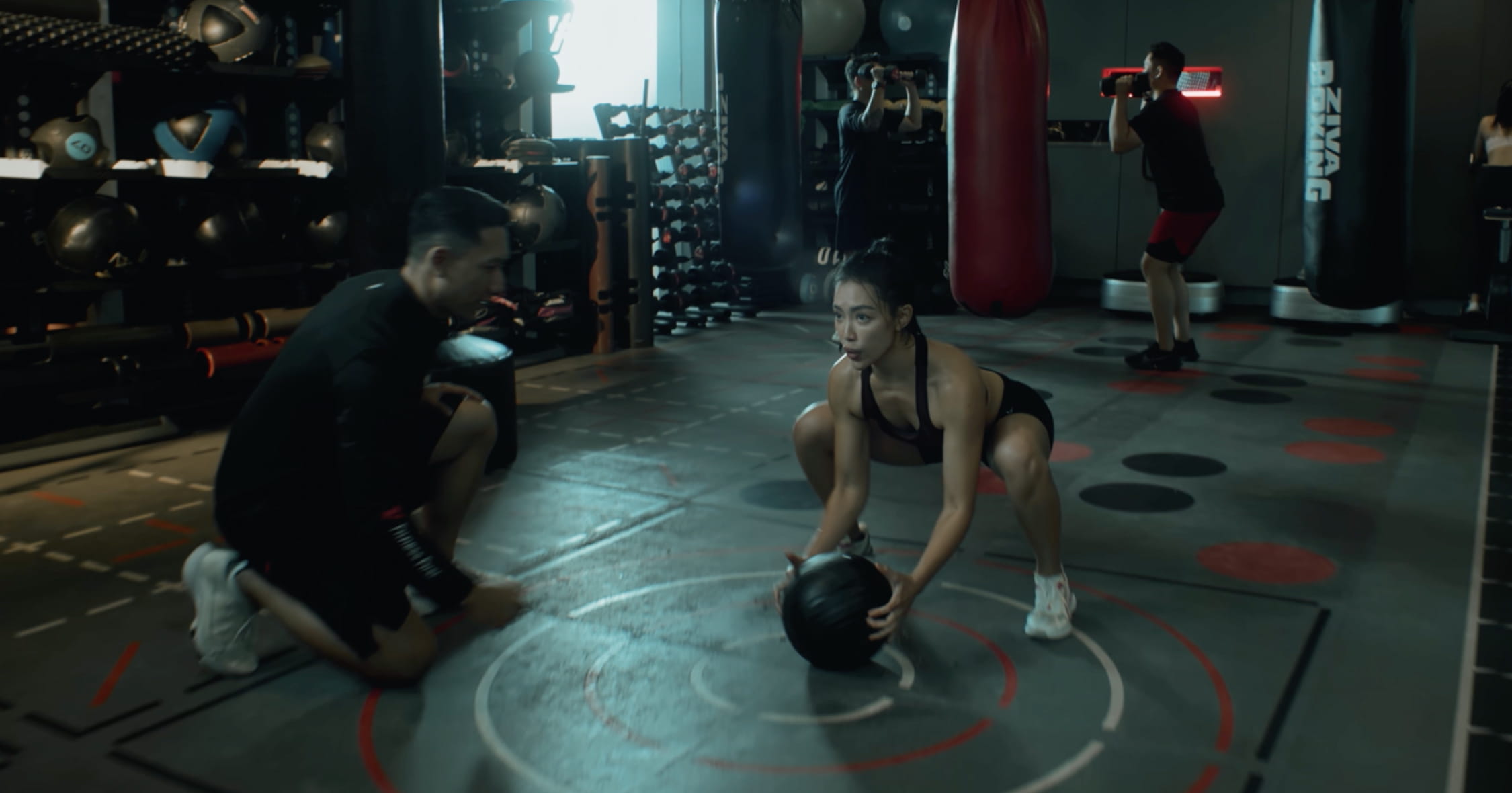
You can absolutely start strength training on your own. But for most women starting out, a few sessions with an experienced personal trainer is the biggest shortcut there is. A coach teaches you proper technique from the very first lift, so you build confidence instead of second-guessing yourself, and you skip the small frustrations and tweaks that quietly push so many people to give up in month one. The weights room stops being someone else's turf. It starts being yours.
This is exactly the kind of guided start Fitness First is built for. Book a Personal Training consultation to learn the foundational lifts with an expert in your corner, or explore membership options to find the setup that fits your goals. Strength gets built one deliberate session at a time, and there's no better day to lift your first than today.
Frequently asked questions
Will strength training make women bulky?
No. Building large, bulky muscle requires high testosterone, a substantial calorie surplus, and years of dedicated training. Women naturally have far lower testosterone than men, making that size very hard to gain by accident. For most women, strength training builds a leaner, stronger, more defined body, not a bigger one.
How often should a woman strength train as a beginner?
Two to four sessions per week on non-consecutive days is an excellent start. This gives muscles time to recover and adapt between sessions, which is when they get stronger. Consistency matters more than intensity early on, so a sustainable two or three sessions beat an ambitious five you abandon.
What are the benefits of strength training for women?
Beyond building muscle, it increases bone density (lowering osteoporosis and fracture risk, especially around menopause), boosts metabolism, improves posture and joint health, supports better sleep and mood, and makes everyday tasks easier. It is one of the best long-term investments in your health.
Should women lift heavy or light weights?
Form first, weight second. Start with a weight you can control through the full movement, where the last couple of reps feel challenging but your technique stays clean. As it gets easier, gradually increase the load. Progressive overload is what drives results.
Is strength training safe during menopause?
Yes, and it is one of the most valuable things to do during and after menopause. As estrogen declines, women lose bone and muscle faster; resistance training directly counteracts both. If you have an existing health condition, consult a doctor or qualified trainer to tailor your programme.
Do I need a personal trainer to start lifting?
Not strictly, but for beginners a trainer dramatically shortens the learning curve: teaching correct technique from day one, preventing the frustration and minor injuries that cause many to quit, and building gym-floor confidence far faster than going it alone.
Sources
- Watson SL et al., LIFTMOR randomised controlled trial, summarised in Exercise for Postmenopausal Bone Health (PMC review): high-intensity resistance training improves bone mineral density and is safe and well-tolerated in postmenopausal women with osteopenia or osteoporosis.
- Menopause hormone therapy, exercise and bone mineral density (PMC scoping review): resistance training 2 to 3 days per week at moderate-to-high intensity is optimal for improving bone density in menopausal women.
Related Articles
How to Read Real Fitness Progress Like a Coach
18 Aug 2026.jpg)